
Likhachev on Paks II: Construction on Schedule, Rosatom Ready for Dialogue
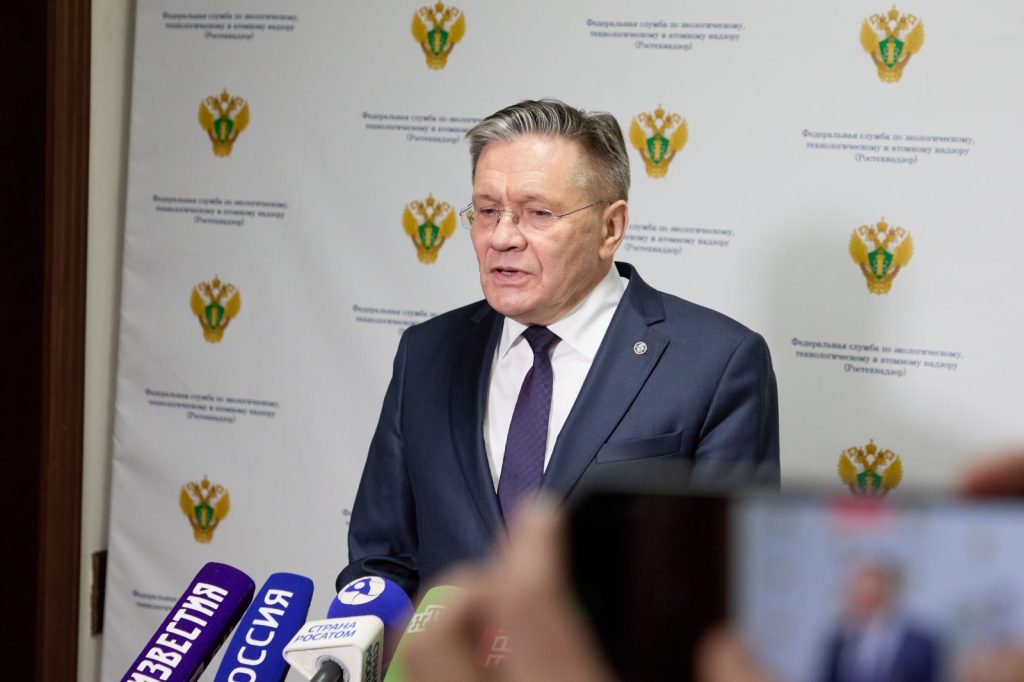
The new Hungarian administration, led by Péter Magyar, is publicly questioning the sustainability and transparency of the contract for the construction of the “Paks II” (Paks-2) nuclear power plant. However, the Russian state corporation Rosatom states that work on the construction site is proceeding according to schedule. Rosatom’s Director General, Alexey Likhachev, provided a more detailed overview of the situation on the ground, emphasizing that the project has gained good momentum and that the Russian side is ready to speak with the new leadership in Budapest in, as he put it, “the language of numbers and facts”

On-Site Construction and the International Consortium
According to Likhachev, preparatory work for pouring the foundation of Unit 5 is entering its final stage. So far, more than 18,000 cubic meters of concrete have been pumped, completing over 80 percent of the concrete preparation for this section. The completion of this phase is planned before the start of winter, while excavation work for the “nuclear island” foundation pit is currently underway at Unit 6, where preparations for “first concrete” are expected to begin by the end of the year.
Parallel to the civil construction, the manufacturing of the VVER-1200 reactors for both new units has begun in Rosatom’s manufacturing facilities, while the core catcher, weighing 730 tons, was delivered to the site back in August 2024.
The head of Rosatom particularly underlined the international character of the project, likely attempting to counter the perception that this is an exclusively Russian-Hungarian endeavor. For instance, equipment for the turbine island is supplied by the French company Alstom, which began turbine production for Paks II at its Belfort plant in April 2025, while companies from the US, Germany, Austria, Switzerland, the Netherlands, the Czech Republic, Slovakia, and Turkey are also participating directly in the project.
Message to Budapest: Reassessing Parameters Would Be Costly
Commenting on the political shifts in Budapest and the new leadership of the Hungarian customer entity, Likhachev noted that working contact has been established with the new management, but an official request for a meeting has not yet been received from Péter Magyar’s government itself.
Referring to media announcements regarding a contract revision, the head of Rosatom issued a clear warning about the consequences of potential cancellation or significant delay of the project:
“We expect that the discussion in Hungary regarding the country’s energy security and the role of nuclear energy will be conducted in a pragmatic and constructive spirit. The country’s development requires the fastest possible response to energy challenges. According to many experts, a hypothetical reassessment of the key parameters of the Paks II project would require not only a significant delay in deadlines, but also a fundamental review of its financial structure,” Likhachev warned.
Commentary
Alexey Likhachev’s warning references at least two things: finances and changes to the technical specifications of the Paks II project. As for the former, the situation is relatively clear: terminating the contract or changing the contractor would mean the potential risk of losing the €10 billion Russian state loan, the possible payment of huge penalties, and a multi-year delay in commissioning 2,400 megawatts of new baseload capacity. Therefore, as we noted a few days ago, statements from the new government in Budapest should primarily be viewed as an attempt t at verbally ligning with Brussels, while economic and pragmatic realities will most likely prevail on the ground.
The second component, however, is even more interesting, as Likhachev is likely referring to possible design modifications and the construction of a closed-loop cooling system that would operate independently of Danube water levels, where low water levels have caused severe operational issues in recent weeks. Modifying the design at this stage would certainly entail noticeable additional costs—higher even than the construction of the system itself, as it would need to be retrofitted into the existing design. However, it remains a major question whether that cost would be higher or lower than the potential cost of shutting down the nuclear plant once or twice over its entire operational lifetime. This calculation depends heavily on the dynamics of climate change: if such droughts and hydrological conditions on the Danube become the norm, such a step would eventually pay off. If they do not, it would not.
In other words, this calls for a complex decision that must be made by a serious team of experts capable of factoring a wide array of data and variables into the equation. Put simply—Hungary will have to weigh the options and make a choice.
Source: Rosatom
S.A.